
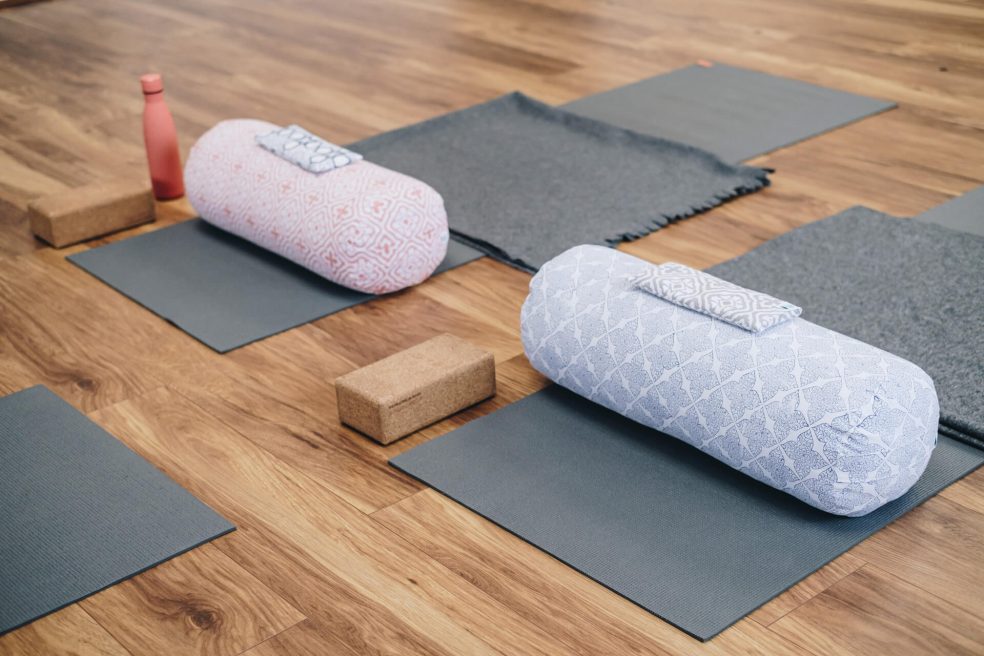
There are often a couple of reasons why we start going to a yoga class. It either comes from needing to strengthen or stretch a part of the body due to injury or a condition or the need to relax and destress. Yoga is well talked about as a tool for relaxation and is even prescribed on the NHS for that reason.
Yoga is a fabulous holistic practice which can bring so much benefit to the whole body, physical, mental and nervous system wise. But there are also lots of different types of yoga and not all of them will be relaxing to everyone. It is important to take the time to explore those different styles and to really focus on how they make you feel during and after the practice, both emotionally and physically.
How can yoga help you to relax?
Social media has made most people think that yoga is about fluid flowing movements focused on flexibility and stretching, but a less talked about benefit is what it does to your nervous system. If you’re anxious and exhausted, forcing yourself through a fast, intense flow can spike stress hormones, rather than helping you to feel calmer. The practices that help when you are stressed are slow and supported, often looking ‘boring’ when observed through the Instagram lens. Those practices are exactly what an overwhelmed brain needs.
A lot of yoga is about bringing the focus to the breath and it is this focus that can really help you move from a more fight or flight nervous system state into a more relaxed, rest & digest state. By focusing on the breath we tend to lengthen it’s rhythm which makes our breathing more efficient, increasing the rate of gaseous exchange and stimulating the nervous system to unwind.
Why could one style of yoga help you relax more than another?
We are all unique. Living in unique bodies with unique experiences and so yoga, like so much else, is not one size fits all. What is relaxing for one person won’t necessarily be relaxing for someone else. As we’ve already explored it is the focus on the breath that is so often the tool that makes yoga relaxing for our nervous system.
For some that focus works perfectly as a one breath, one movement practice such as a flowy vinyasa whereas for others that fast flowy movement will feel like they can’t catch their breath and actually will have the opposite nervous system reaction than the one we are craving. For some a slow propped practice will be exactly what their nervous system and physical body is asking for and others will find the stillness and quiet too much.
This is why it is important to explore styles of practice, teachers and how the practice lands in our body.
How can yoga props help you to relax in a yoga practice?
Yoga props can help to make yoga genuinely useful for stress and anxiety. Propping the body, with a bolster, block or even cushions from the sofa, helps to find ease and within that space we can take those deeper breaths. As we’ve already looked at those deeper breaths in turn helps to calm the nervous system.
When supporting the nervous system and helping it to relax it is also not about pushing into a yoga poses and instead taking the time to feel supported. Props do that for you. By supporting yoga asana we give the body time to ease into the shape rather than fight against it. This means that the nervous system feels a little safer and will often help you move a little deeper into a stretch. Because when we try to the force the body into a shape it is not ready for the nervous system will react to the force and usually tense up. This obviously means the shape feels less comfortable physically but it also means that lengthened breath is harder to find and the nervous system will not be dropping into that more relaxed state.
Which poses could props help in for relaxation?
You may be practicing a vinyasa flow, a hatha practice with plenty of holds or a slower restorative practice but props are always a great addition. These three poses below incorporate props to help find that ease and space in the body we have already spoken about and can be added to any style of practice, whether holding the pose for 5 breaths or 5 minutes.
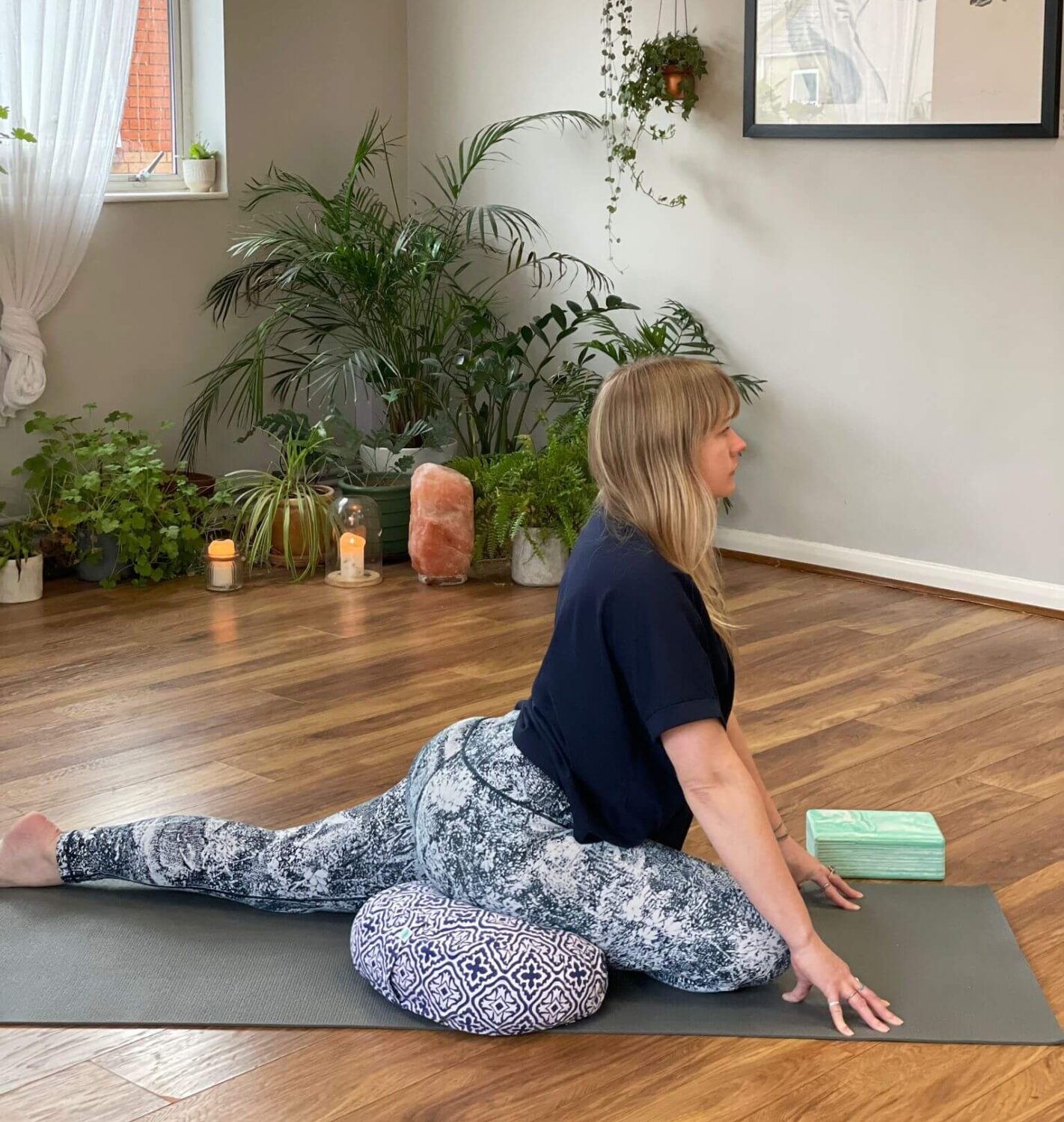
Pigeon – Kapotasana
Pigeon pose can be a big stretch aroound the hips, glutes and hamstrings. Bringing a block, meditation cushion or bolster under the bottom helps the body to ease into the posture.
Giving that little bit of support under the body means you can focus back in on the breath rather than gripping and holding the posture more in strength.
Either stay upright like pictured or ease forwards into more of a fold

Childs Pose – Balasana
Childs pose is often given as a pose to rest in but it is not always restful for everyone. By bringing a bolster under the torso it creates less of a stretch through the lower back and gives the head something to rest onto.
You can use just a bolster or prop the head end up on a block to create more of a slope for extra ease. A rolled blanket under the ankles is also a beautiful addition.
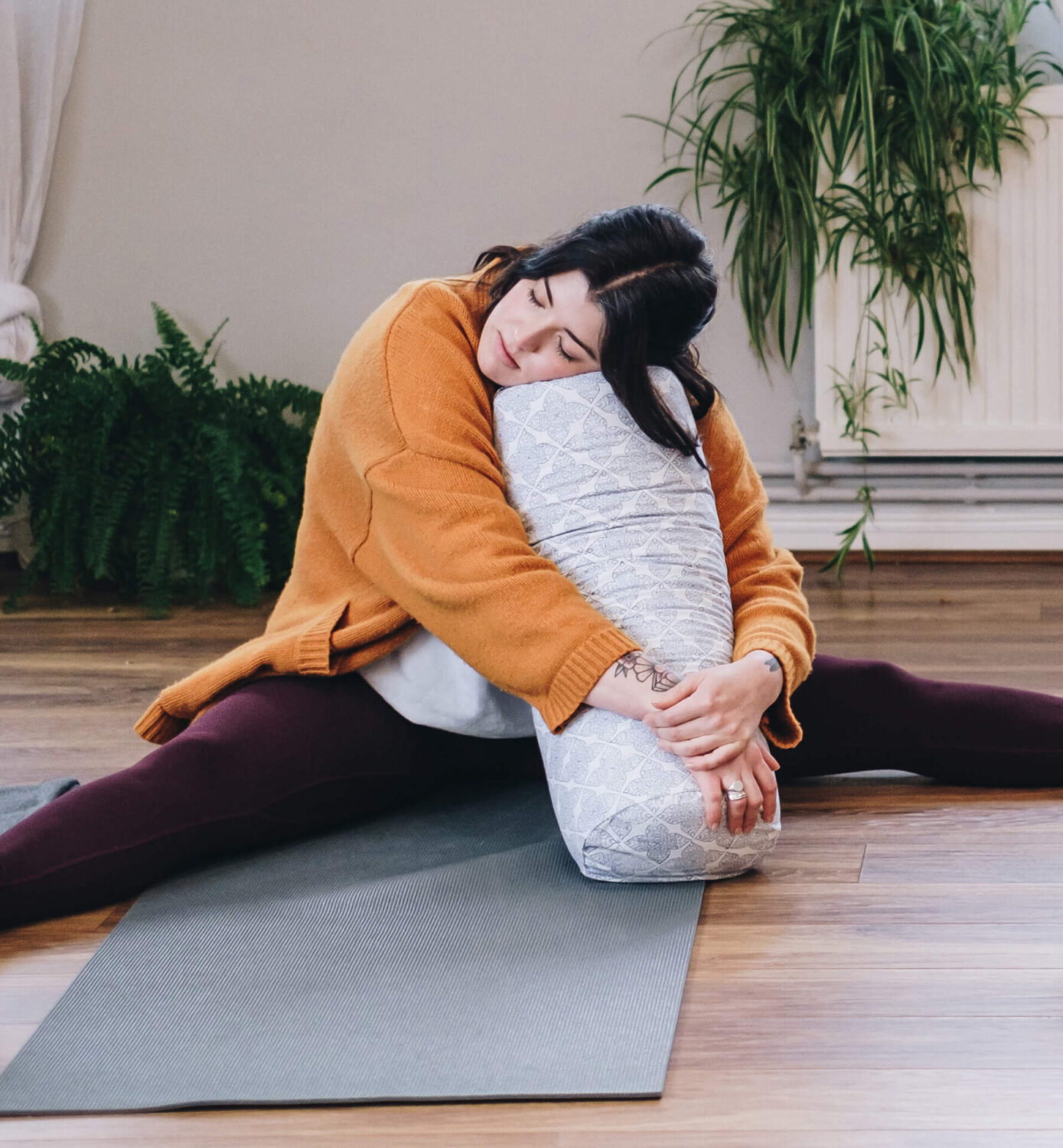
Seated Wide Leg Forward Fold – Upavistha Konasana
Forward folding is tricky for a lot us and can rarely feel restful. Adding a bolster to support the head and torso really helps find the softness.
Hugging the bolster like this means that you can vary the angle that the bolster is at. Maybe starting higher and as you stay in the pose gradually moving the bolster further away, angling greater.
Again this support gives the body space to breathe but it also helps you to soften into the posture rather than fight against it.
How do you find the style of yoga that helps you to relax?
One word, explore.
Take the time to explore different classes, styles of yoga and also maybe the time of day that you practice. Notice and note down how you felt in and after the practice and look for patterns. You might find when you’re busy that actually that flowy vinyasa reduces stress because you can get out of your head easier and at other points a slower restorative is exactly what you need.
As I’ve tried to explain in this post there is no right or wrong, our bodies reaction to practice can change all the time. But what doesn’t is that focusing on your breath and lengthening it will always down regulate your nervous system and props are always a beautiful tool to help the physical body relax.